For collectors

Are NFTs safe from quantum computers?

A quantum computer could one day forge the key that owns an NFT, but not the hash that pins its artwork. On Hedera you can change the key and keep the NFT.

Content reviewed on
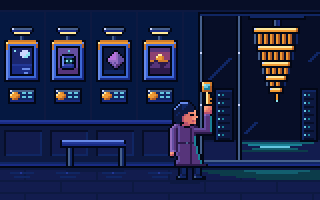
A gallery wall of framed pixel artworks, each frame with a small hash seal, where a collector holds a new key while a quantum computer glows behind glass in the next room, SentX pixel art

Mostly yes, with one part to watch. An NFT's artwork and metadata are pinned by a content hash, and a quantum computer gains little against a hash. What it could one day break is the signature key that controls the account holding the NFT. On Ethereum, replacing that key means moving every NFT to a new address. On Hedera, the account keeps its ID when its key changes, so the NFTs, the allowances and the listings stay where they are.

No quantum computer today can break the keys behind NFT wallets. This page is about the future machine standards bodies are planning for, and about which part of an NFT it would touch.

An NFT in three parts

PartWhat protects itQuantum outlook
OwnershipThe signature key of the account that holds the NFTBreakable by a future large quantum computer (Shor's algorithm). The key can be replaced.
Artwork and metadataA content hash, usually an IPFS CID built with SHA-256Strong. Grover's algorithm only halves the security level.
Royalties on HederaCustom fees the network applies to the collectionFee rules, not a key you hold. Any key that can change them can be rotated.

A stopwatch marks the part that needs an upgrade; a check marks a part that holds today. The two quantum algorithms are explained in Is HBAR quantum resistant?.

Ownership rests on a key

Whoever can sign for the account that holds an NFT can transfer it, list it or approve someone else to move it. Today those signatures are Ed25519 or ECDSA on Hedera and ECDSA on Ethereum. Shor's algorithm, run on a large enough quantum computer, would recover a private key from its public key, and public keys are visible: on Hedera the key is part of the account record, and on Ethereum it can be read from any transaction the address has signed.

So the question for a collector is not whether the key could fall one day, but how hard it is to replace when a stronger key type exists. That is where the two networks differ most.

Artwork and metadata are pinned by hash

A Hedera NFT stores a short pointer on the ledger, often an IPFS address of its metadata file, and that file points at the artwork. An IPFS address (a CID) is derived from the content itself, with SHA-256 by default. Change one pixel or one trait and the CID changes, so the pointer on the ledger no longer matches.

Faking a file that matches an existing SHA-256 hash is a search problem. Grover's algorithm speeds that search up, but it still leaves about 128 bits of security, far beyond any computer. The pointer itself sits in the ledger, whose history Hedera links with SHA-384.

The real risk to artwork is ordinary: a file nobody keeps pinned can disappear. A quantum computer does not change that. How NFT storage on IPFS works covers who keeps the files available.

Royalties on Hedera are network rules

A Hedera collection can carry royalties as custom fees in the token itself. The network applies them when an NFT changes hands for HBAR or another fungible token in the same transaction, and pays the creator's fee collector directly. No marketplace contract has to choose to honour them.

Royalties can only be changed if the collection has a fee schedule key, and that key is a signature key like any other. Hedera lets existing token keys be replaced under the required signatures, much as a collector replaces an account key. Token keys explains which key controls what, and royalties and fallback fees explains when the fee applies.

Ethereum and Hedera, side by side

An ERC-721 NFT on Ethereum records its owner as an address, and an ordinary Ethereum address is derived from one key that can never change. Moving to a new key means a new address, so every NFT has to be transferred one by one, each with its own gas fee, and any marketplace approvals and listings tied to the old address are left behind. NFTs held in a smart contract wallet are the exception, because such a wallet can change its signers.

A Hedera account is a ledger entry such as 0.0.12345 with a key attached. One account update, signed by the old key and the new one, swaps the key. Nothing is transferred.

Ethereum (ERC-721)Hedera
Who owns the NFTAn address derived from a keyAn account ID assigned by the network
Changing the keyMove every NFT to a new addressOne account update
Approvals and listingsGiven again from the new addressStay with the account
RoyaltiesPaid when a marketplace chooses to pay themApplied by the network on qualifying transfers

On SentX after a key change

  • Your NFTs and listings stay. A listing on SentX rests on the NFT allowance your account gave, and that allowance belongs to the account, not to the key. Changing the key does not delist anything.
  • Sign in with the new key. SentX checks every sign-in against the key your account holds on the network at that moment, asking a Hedera consensus node first. Once the change has reached consensus, the old key no longer signs you in. A key change does not end a sign-in that is already open.
  • Reconnect. After the change, disconnect your wallet on SentX and connect again with the new key. If the old key leaked, also remove allowances you did not give, and the ones behind your SentX listings, then list again. Changing your account key shows where.
  • Use a single key to sign in. SentX sign-in works with an account that has one Ed25519 or ECDSA key. An account whose key is a key list or a threshold key cannot sign in to SentX today, so keep those for a vault account. MetaMask sign-in needs an ECDSA account whose EVM address still matches its key, so rotate a MetaMask account only if you will sign in another way.

How to change a Hedera account key has the steps, the safety checks and the cases to avoid.

What to do now

  • Nothing urgent. No quantum computer can break today's wallet keys, and Hedera says existing keys keep working through its transition.
  • Keep your recovery phrase offline. A leaked phrase is how NFTs are actually stolen today.
  • For a large collection, consider a separate vault account with a threshold key, and trade from a single key account.
  • When your wallet offers Hedera's post-quantum key type, targeted for 2027, rotate to it. Your NFTs stay put.

Common questions

Can a quantum computer steal my NFTs today?

No. No quantum computer today can derive an Ed25519 or ECDSA private key from a public key. The concern is a future machine, years away by most estimates.

Could a quantum computer change my NFT's artwork?

Not by breaking the hash. The artwork and metadata are addressed by a SHA-256 content hash, and a quantum computer only halves its security level. A file that is not kept pinned can still go offline, which is a storage problem, not a quantum one.

Do I have to move my NFTs to a new wallet to be quantum safe?

On Hedera, no. You change the account's key and the NFTs stay in the same account. On Ethereum, an ordinary wallet has to move each NFT to a new address.

Are Hedera NFT royalties affected by quantum computers?

Royalties are fee rules stored with the collection and applied by the network. Only a collection with a fee schedule key can change them, and existing token keys can be replaced with the right signatures.